Full Moon in Aries – Sept. 26, 2026, 16:49 UT
The Autumnal Equinox was on Sept. 23, 2026, when the Sun entered Libra. The Full Moon in Aries follows on Sept. 26, 2026. The Moon is in conjunction with Neptune and the trans-Neptunian Borasisi, which completed its entry into Aries in January 2025.
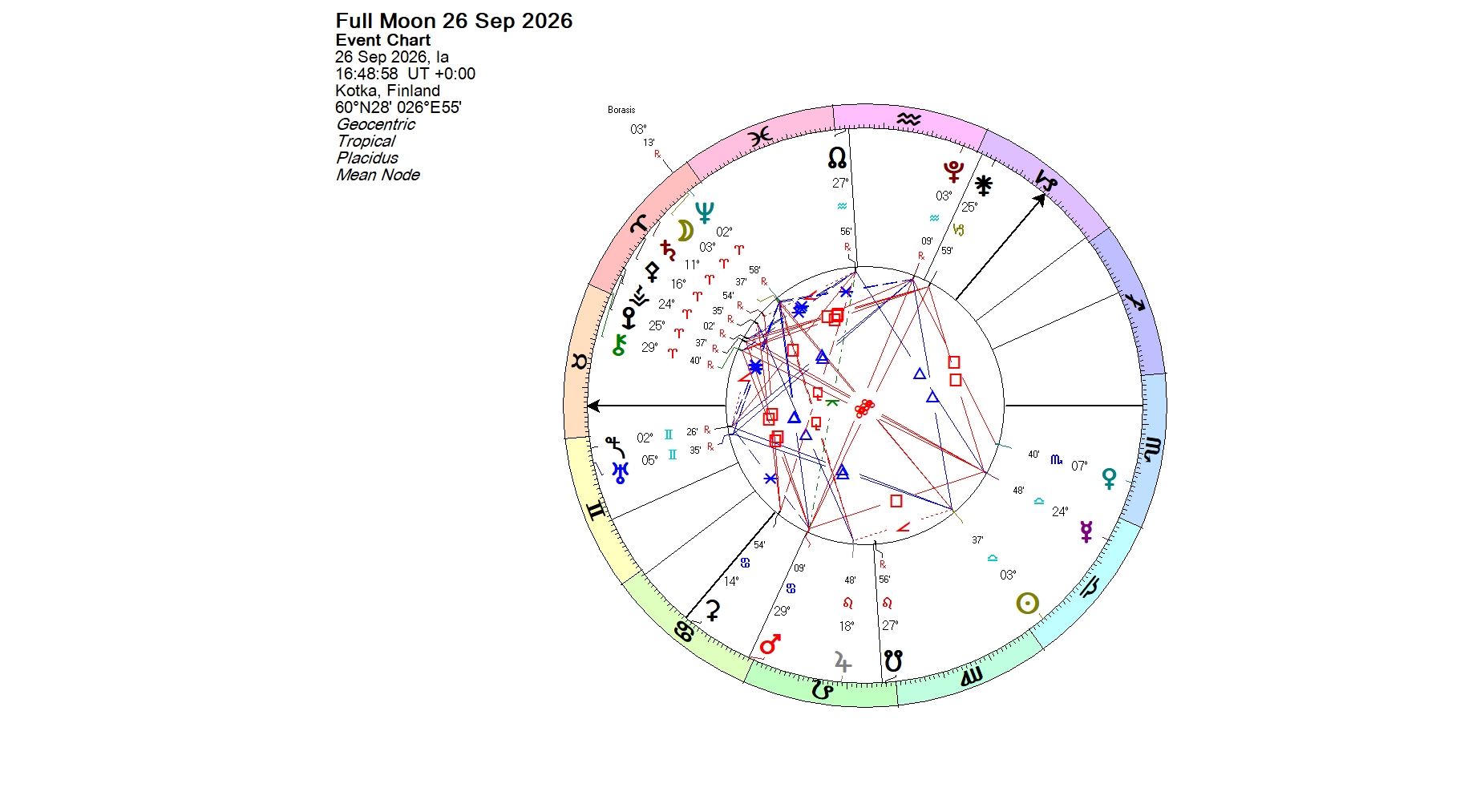
Neptune is associated with denial, delusion, deception, and confusion. It dissolves boundaries and can blur reality.
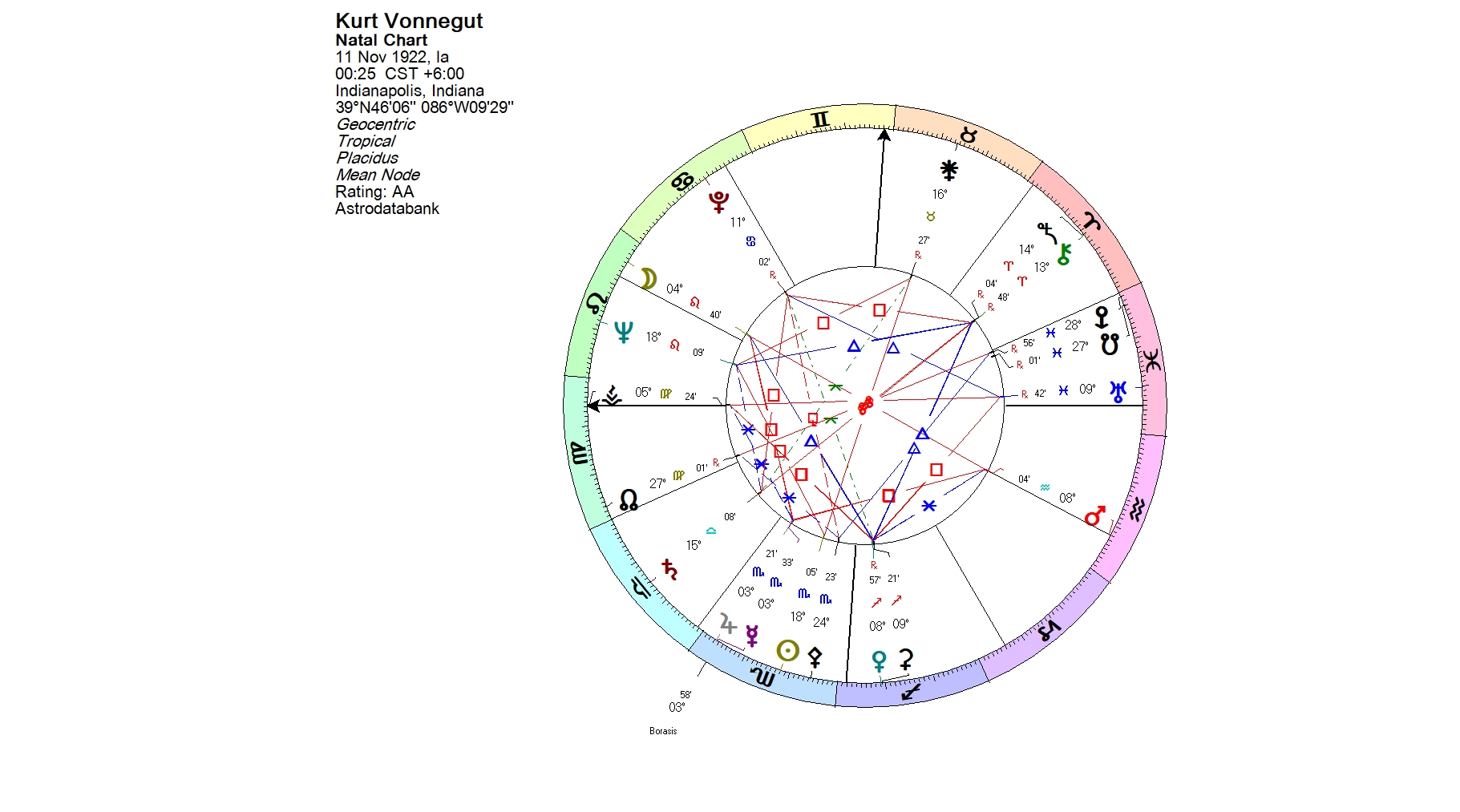
Borasisi is a cubewano and a binary object. The companion is named Pabu. Borasisi orbits the Sun on a moderately elliptical orbit of 287.5 years. It may have a lot in common with Neptune. Borasisi and Pabu are the mythical personifications of the Sun and Moon in the fictional cosmogony of Bokononism described in Kurt Vonnegut’s novel Cat’s Cradle. The foundation of the fictional religion of Bokononism is based on living by the holy untruths that make one happy. Kurt Vonnegut (born Nov. 11, 1922, Indianapolis, Indiana) has an exact conjunction of Mercury, Jupiter, and Borasisi in his chart.
We are all exposed to propaganda, conspiracy theories, and the products of artificial intelligence on a daily basis. AI seems to be everwhere these days, whether you like it or not. Recently an OpenAI agent hacked Australia’s health system and tried to get the information it was told to find. There are also other cases of AI penetrating secure systems on the open internet. This is unacceptable.
Experts and many heads of state have warned of risks of artificial intelligence. Pope Leo just warned against “losing our humanity amid a paradise of machines invading and conditioning our daily lives.” AI was a major theme at the opening of the UN General Assembly in New York this week. UN Secretary-General Antonio Guterres said that humanity is increasingly transferring power to machines and insisted that decisions over life and death must remain under human control. Finnish President Alexander Stubb also called for humans to retain control over AI development.
President Stubb (born April 1, 1968, Helsinki, Finland) has the Sun-Borasisi square in his chart. Another person with the Sun-Borasisi square, Bertrand Russell (born May 18, 1872, Trellech, Wales), who is regarded as one of the most influential philosophers of the 20th century, has said: “People’s opinions are mainly designed to make them feel comfortable; truth, for most people is a secondary consideration.”
In her article Astrology, Ecopsychology & Nuclear Networks: A TNO Case Study (of Borasisi), astrologer and psychotherapist Sally Hildreth tells about how radioactive waste was illegally dumped in the West Lake Landfill, that caught fire in 2010 and was still burning at the time of the publication of her article (TMA issue 223 Sept.-Dec. 2022). “Even the fire isn’t techically a fire (thus you can’t legally call it a fire), it’s a ‘sub surface smoldering event’,” she writes. I immediately associated this with how the Russian authorities continued calling the Russian-Ukrainian war a “special military operation” for years after Russia’s invasion had started.
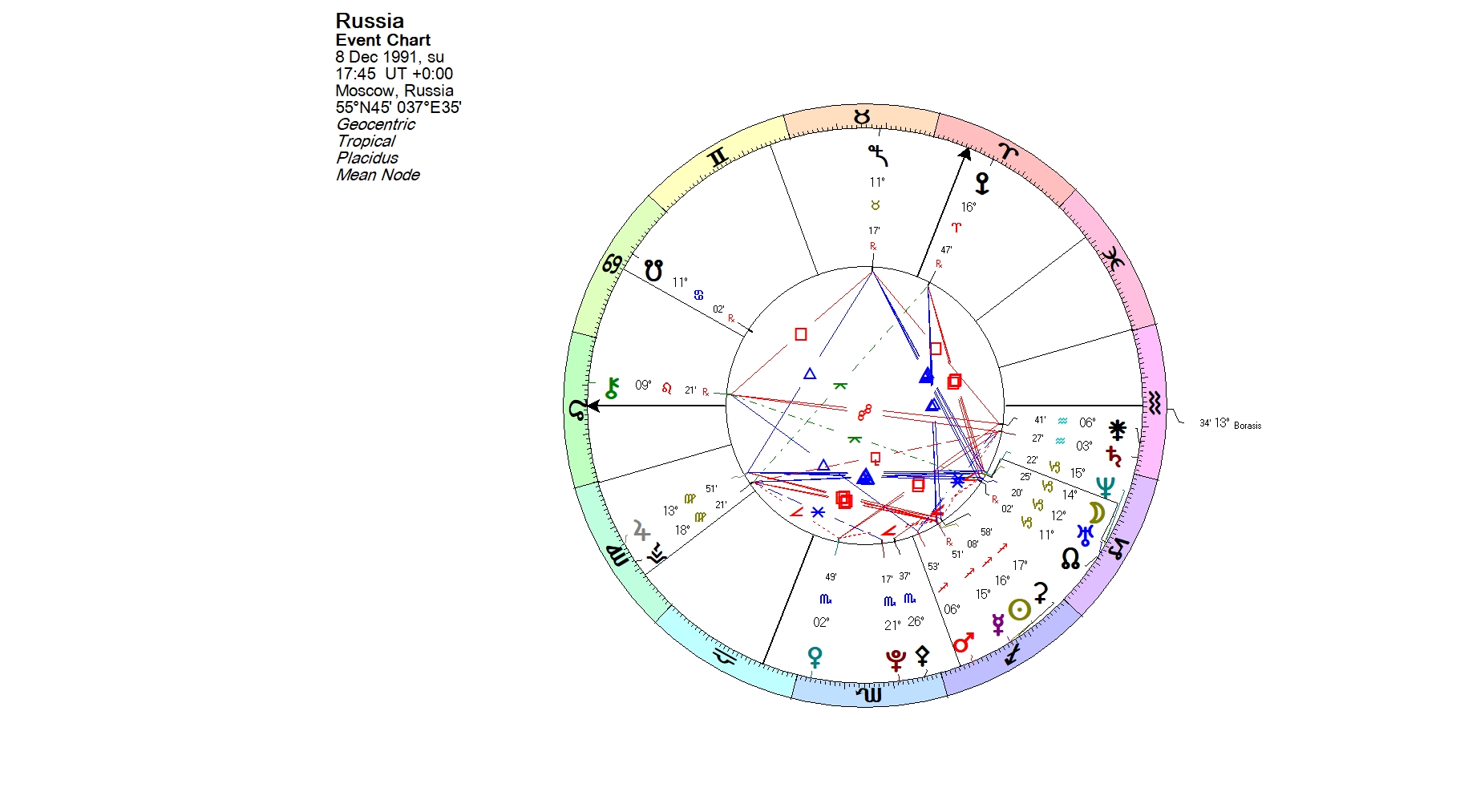
In the chart of Russia (Dec. 8, 1991 at 17:45 UT, Moscow, Russia) Borasisi is right at the descendant. The chart data I am using is from The Book of World Horoscopes by Nicholas Campion. He writes: “The formal dissolution of the Soviet Union was anounced on 8 December 1991 in Minsk by the Presidents of the Republics of Russia, Ukraine and Byelorussia (now known as Belarus), three of the original signatories. – – – It marks the de facto end of the Soviet Union and the independence of Russia. – – – Boris Yeltsin’s public anouncement of the Minsk Declaration at about 7:45 pm Moscow Time (5:45 pm GMT) represents the public proclamation of Russian independence.”
Finnish author Jari Tervo, known as an opinionated and outspoken figure, wrote a few years ago in his column: “The Russian people remain innocent, decade after decade. They have heard nothing and seen nothing. They are blind eyewitnesses. They pretend not to know about the crimes, because it is more comfortable that way.”
In 2023 the British researcher, historian, and author Jade McGlynn visited Helsinki and was interviewed. She has specialized in modern Eastern Europe, particularly Russia under Vladimir Putin. According to McGlynn, a large proportion of Russians support the war, and an even larger share accepts it. She argues that the role of fear in shaping their opinion has been overstated. Conversely, too little attention has been paid to the fact that Russians want to explain things in the best possible way for themselves; they desire a more comfortable version of the world around them, she said.
It is exhausting to be on one’s toes all the time, but let’s try to stay vigilant in the face of the challenges of this Full Moon.